Can lights use a metal housing, or “can,” that sits inside the ceiling to hold the light source. Canless lights have no housing and mount directly into the ceiling surface. Both are types of recessed lighting fixtures, but they differ in installation, maintenance, and long-term use.
This article explains how each type works, compares pros and cons, and helps you decide which option fits your home.
What Are Can Lights?
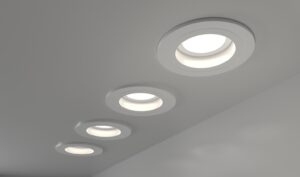
A can light is the traditional form of recessed lighting. The fixture includes a metal housing that sits in the hollow opening of the ceiling. Inside the housing, the wiring and socket hold the light. A trim ring finishes the edge where the ceiling meets the light, and the bulb provides illumination.
Common bulb types include incandescent, halogen, CFL, and modern LED lights. Because the housing is separate from the bulb and trim, can lights allow more customization options and flexibility over time.
Pros of Can Lights
- Durable and long lifespan
- Bulb can be replaced independently without removing the housing
- Wide range of trim options such as baffle trims, wall wash trims, and adjustable trims
- IC rated housings reduce fire hazard when in contact with insulation
Cons of Can Lights
- Larger ceiling cutouts are required for installation
- More difficult installation in finished spaces
- Higher labor cost compared to canless lights
What Are Canless Lights?
 A canless light is a newer type of lighting fixture that does not use a separate housing. Instead, the unit combines LED technology, trim, and electrical components into one thin module. The canless light requires only a small opening and mounts directly into the ceiling surface.
These fixtures are designed with LED recessed light modules, which makes them efficient and compact. They work well in ceilings with limited depth where a can fixture would not fit.
Pros of Canless Lights
- Easy installation in most ceiling types
- Fits shallow ceilings with limited space
- LED technology provides efficient, cool operation
Cons of Canless Lights
- Shorter lifespan compared to can fixtures
- When the LED fails, the entire fixture must be replaced
- Fewer trim and customization options
Key Differences Between Can and Canless Fixtures
Both are recessed lighting options, but their construction and performance differ.
- Housing vs. no housing: Can fixtures use a metal housing, while canless fixtures do not.
- Installation difficulty: Can lights require larger cutouts and more labor, while canless lights install quickly.
- Ceiling space requirements: Can lights need deeper ceiling cavities, while canless lights fit shallow spaces.
- Bulb and trim flexibility: Can lights allow bulb replacement and a wider range of trims. Canless lights have limited customization.
- Maintenance and replacement: Can lights let you replace bulbs individually, while canless fixtures require replacing the entire unit.
- Energy efficiency: Both use LED lights today, but canless fixtures are always LED-based by design.
Which Option Is Best for Your Home?
The right choice depends on your ceiling type, design goals, and long-term plans.
- Ceiling type: Shallow ceilings favor canless lights. Standard ceilings can handle either type.
- Trim style and type of lighting fixture: Can fixtures allow trims such as baffle, wall wash, and adjustable styles. Canless fixtures have fewer trim options.
- Task lighting vs. general lighting: Kitchens, bathrooms, and offices often need task lighting. Living rooms may benefit from a mix of trims.
- Wet location considerations: Bathrooms, showers, and outdoor ceilings require wet-rated housings or sealed fixtures.
- Budget and maintenance: Canless lights may cost less upfront to install, but replacement requires a new fixture. Can lights cost more to install but allow simple bulb changes.
Cost Comparison
 The cost of recessed lighting varies by type of light fixture, installation labor, and long-term energy use.
- Can lights: According to HomeGuide, installing a can light averages $200–$250 per fixture, including parts and labor. Costs increase if new wiring is required.
- Canless lights: Installation costs are lower, averaging $150–$200 per fixture. They install faster and require smaller openings.
- Long-term savings: LED recessed lights reduce energy costs. Energy.gov estimates LED bulbs use at least 75% less energy than incandescent bulbs and last up to 25 times longer.
Lifespan and Maintenance
Lifespan depends on the type of lighting fixture and light source used.
- Can fixtures: Housing can last decades. Bulbs vary by type—incandescent last 1,000 hours, CFLs 8,000 hours, and LED bulbs 25,000+ hours.
- Canless fixtures: Entire fixture typically lasts 15–20 years but must be replaced as a unit when the LED fails.
- Maintenance: Can fixtures allow bulb changes and trim swaps. Canless fixtures limit customization and require full replacement.
- Safety: IC rated housings reduce fire hazard risks when insulation surrounds the fixture. Always check ratings before installing lights that require insulation contact.
Frequently Asked Questions
Are canless recessed lights better than can lights?
They are easier to install and fit in shallow ceilings, but they have fewer trim options and must be replaced as a full unit.
Do canless lights last as long as can lights?
Canless LED modules last 15–20 years. Can fixtures can last longer since only the bulb needs replacement.
Can I install can lights in a wet location?
Yes, if you use a wet-rated housing and trim. Bathrooms, showers, and outdoor ceilings require sealed trims to protect the light.
Which is more energy efficient?
Both types use LED technology today. LED lights provide the highest energy efficiency and longest lifespan.
Are can lights and recessed lights the same thing?
Yes. Can lights are one type of recessed lighting fixture. Recessed lighting also includes canless fixtures.
Key Takeaways
- Both can and canless are types of recessed lighting fixtures.
- Can fixtures provide durability, customization options, and replaceable bulbs.
- Canless fixtures are slim, easy to install, and always LED-based.
- The best choice depends on ceiling space, budget, and desired trim options.
Brighten Your Home with Genesis 1:3 Electric
 If you want to upgrade your lighting, Genesis 1:3 Electric can help. We install both can and canless recessed lights in Centennial, CO, and nearby areas.
Our team understands ceiling space limits, trim options, and safe installation practices. Call Genesis 1:3 Electric today — “Genesis keeps you out of the dark.”